Find the co-ops that actually fit your resume.
NUWorks Grader reads every posting the way you would — then scores it against your skills, flags the ones you're not eligible for, and saves the strong matches. Optional Semantic AI matches by meaning, too. All in your browser, all private.
Where our users land offers





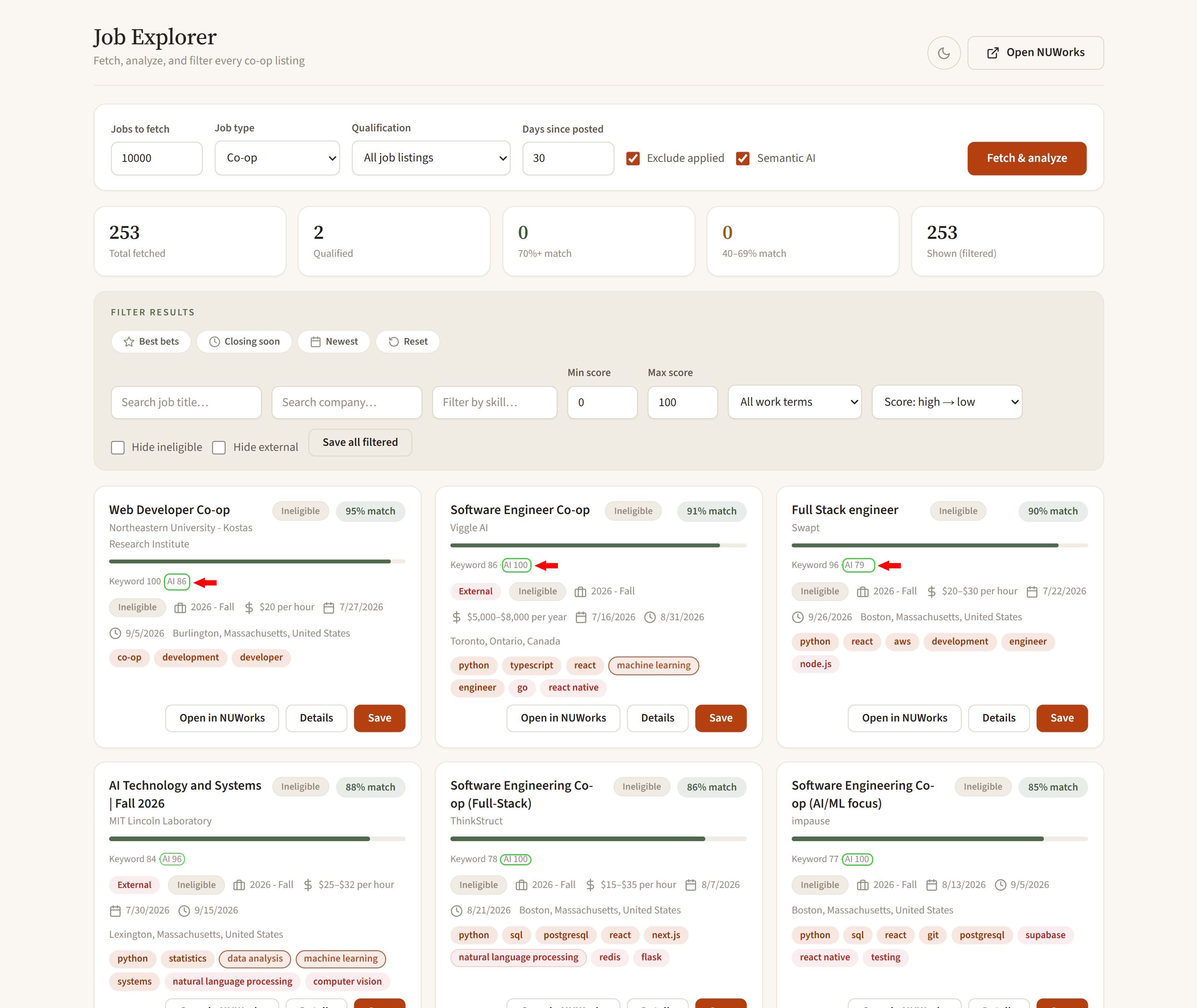
A clearer view of every opportunity
Match scores and eligibility badges, right where you browse. Spot the roles that fit before opening another posting.
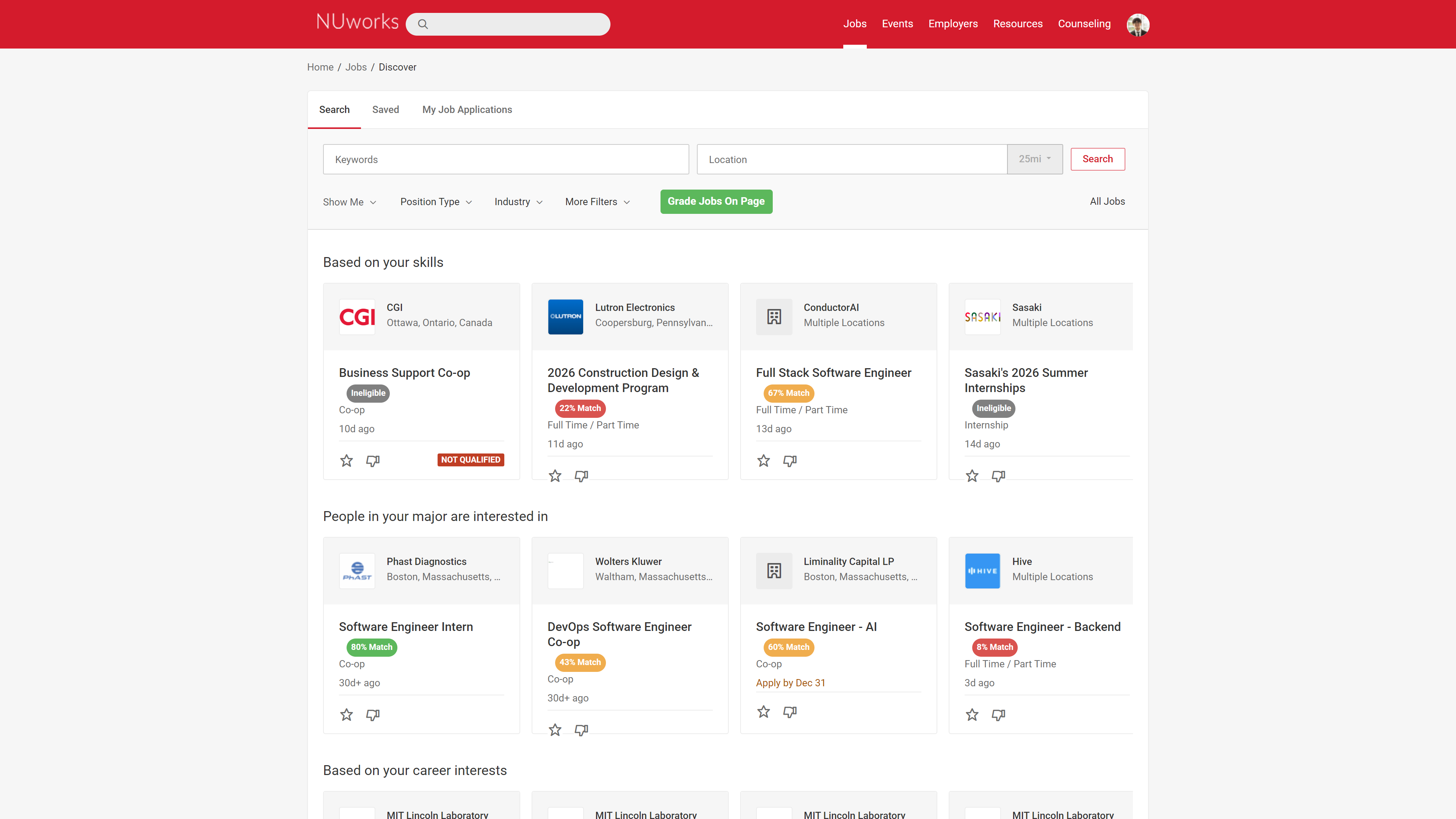
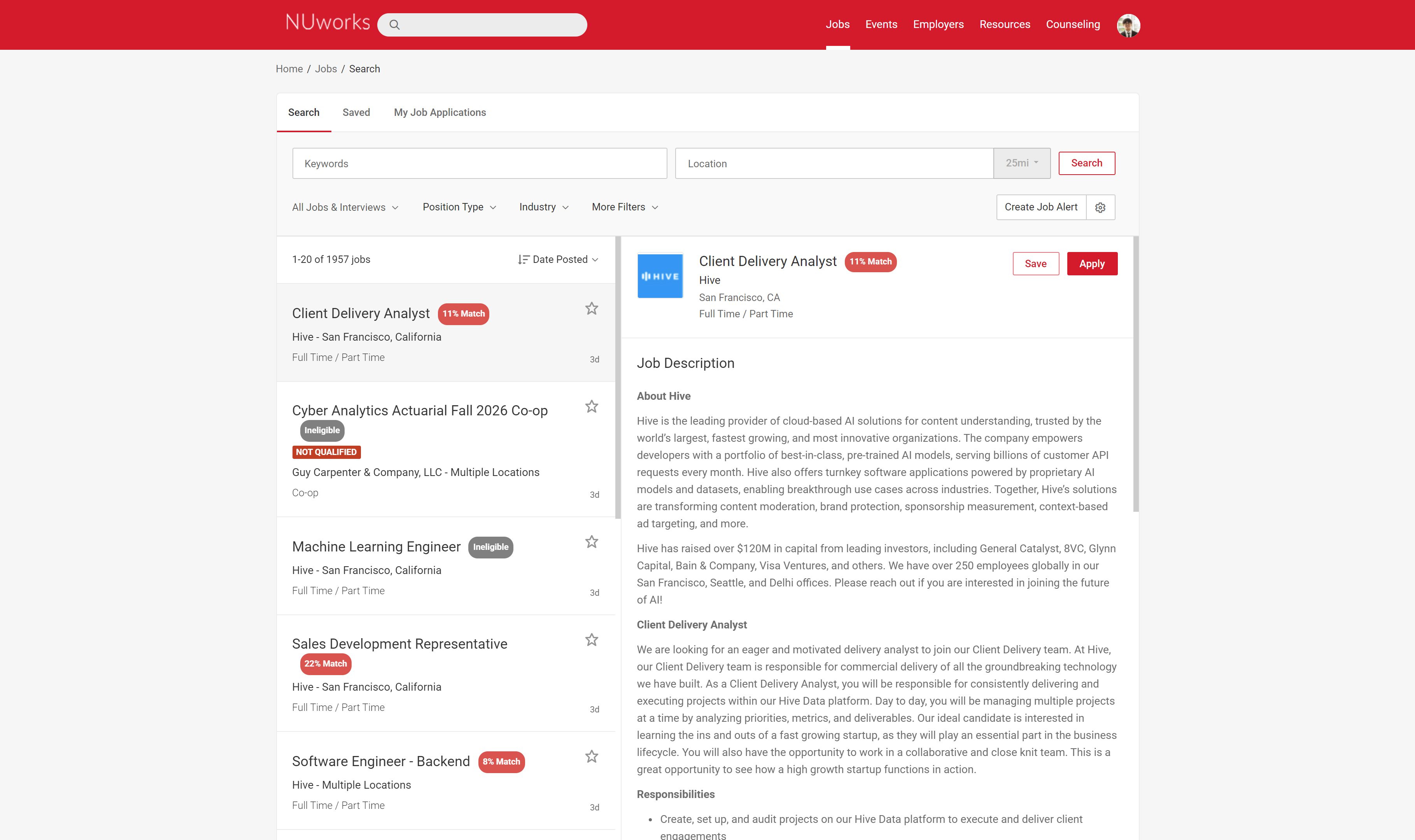
Select any screenshot for a closer look.
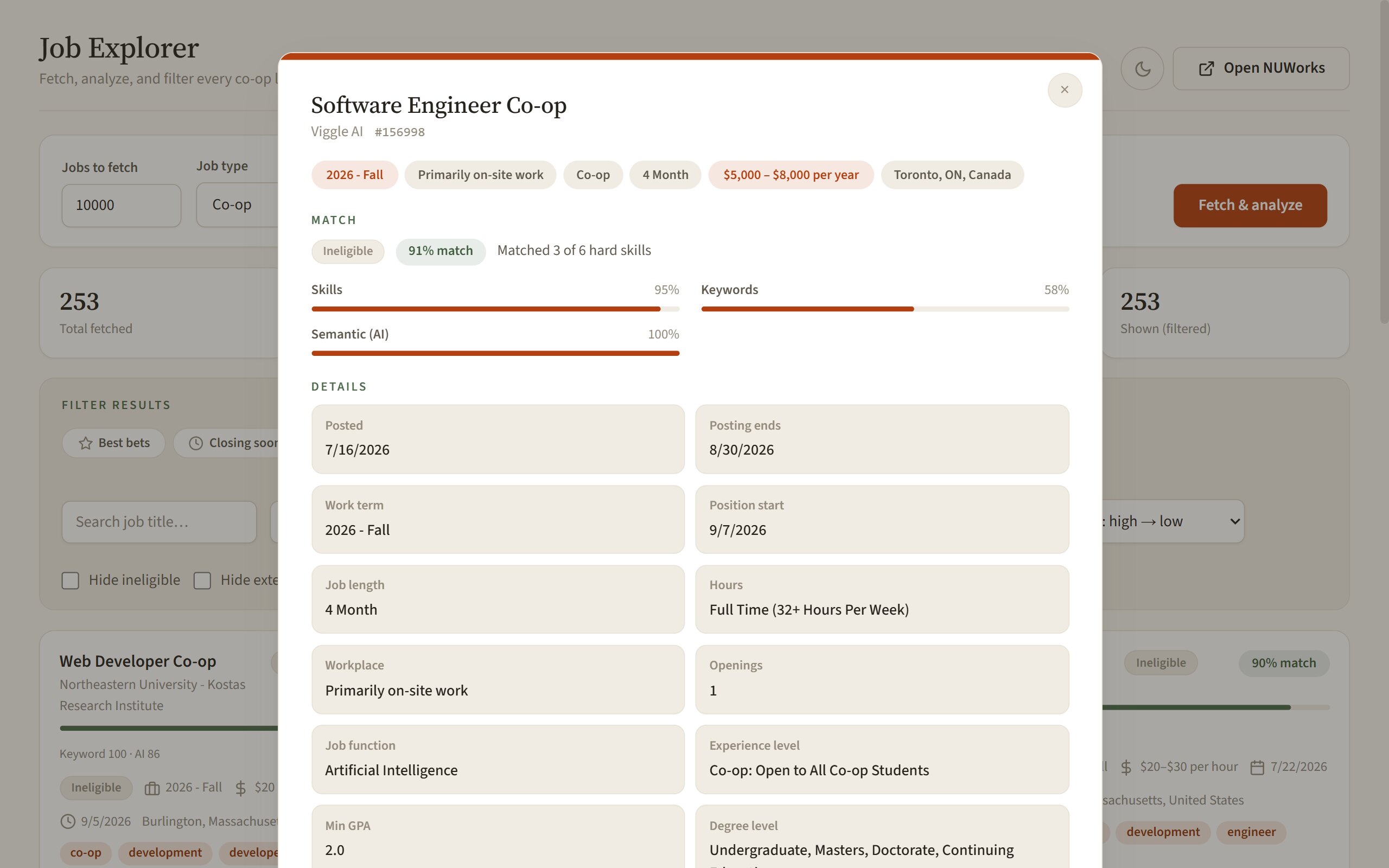
A redesigned Job Explorer and popup
Match scores, an explainable breakdown for every job (now including a Semantic AI bar), smart filters, and a calm interface that follows your system light or dark theme.
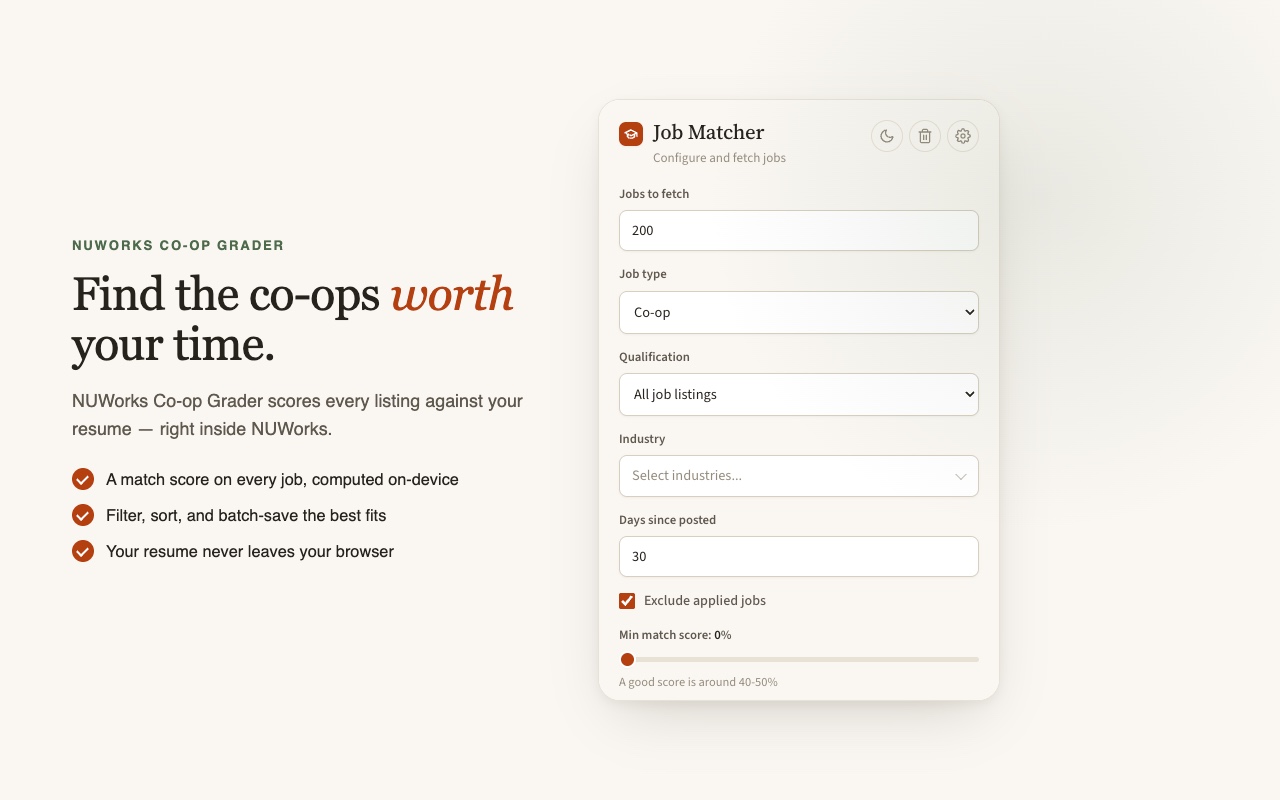
Why use this extension?
Stop wasting time on jobs that don't match your profile. Let smart, on-device analysis do the heavy lifting.
Auto-grading & visual badges
Instantly see match scores, external-application warnings, and eligibility status with color-coded badges on the job list.
Smart filters & batch actions
Filter by match score or freshness. Save all matched jobs in one click, or clean up your saved list just as fast.
Resume parsing
Upload your PDF resume. We extract the text and skills locally to find your best matches.
Semantic AI matching Opt-in
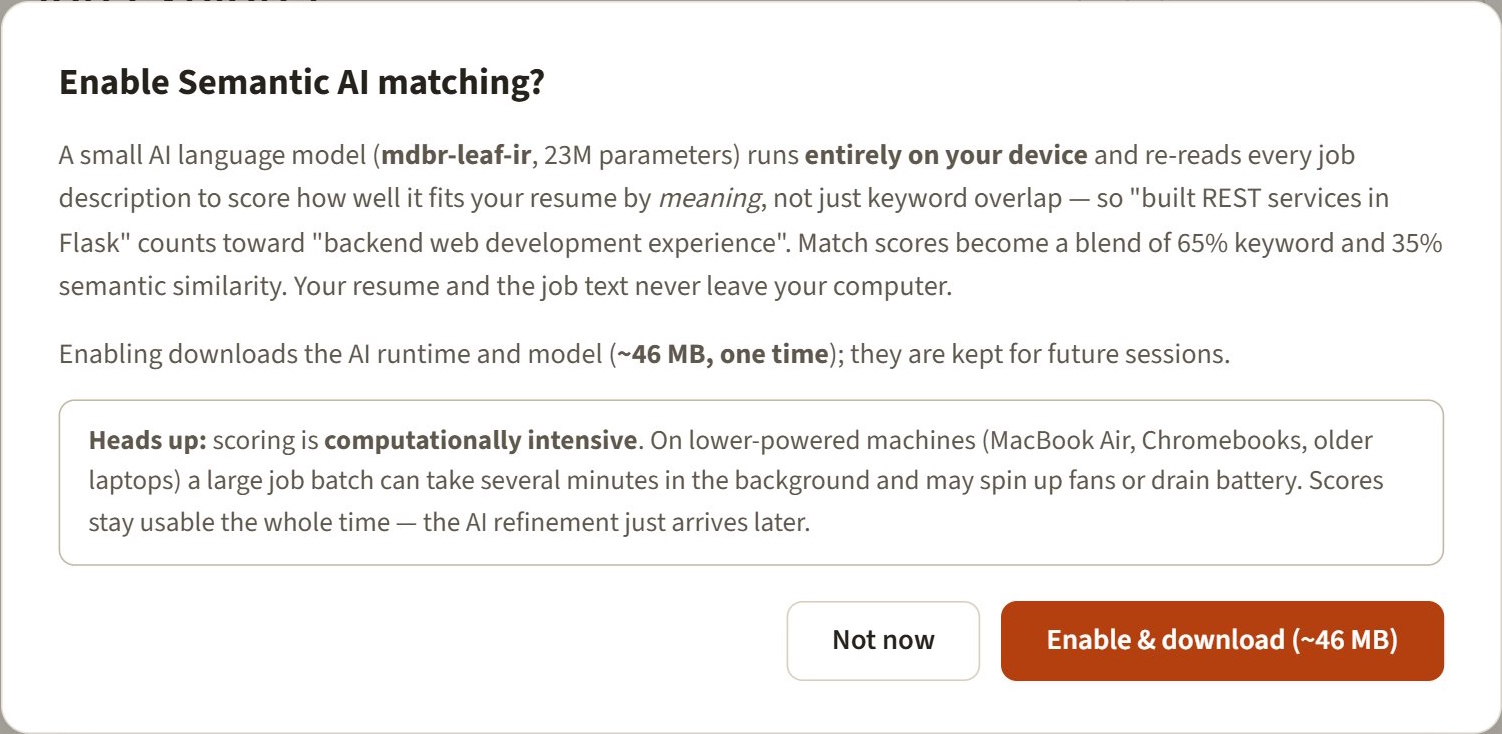
A 33M-parameter BGE model fine-tuned for resume–job fit runs on your device and scores each posting by meaning. Match becomes 65% keyword + 35% AI, with the split shown on every card.
Implied skills
Listing React implies JavaScript; PyTorch implies Python. Related skills earn partial credit and show up as dotted chips, so you're not penalized for not spelling everything out.
Faster Job Explorer
Scores render from a single listing call — no per-job fetching. Extra details load in the background with a status chip, and the AI refinement never blocks the page.
Semantic AI trained for resume-to-job fit
Turn on Semantic AI and a compact model fine-tuned on labeled resume–job pairs runs entirely on your device, re-reading every posting to score how well it fits by meaning—not just keyword overlap.
The gain holds on resumes it never saw
We froze 24 previously unused resumes across 24 career categories, paired each with 40 randomly selected NUWorks jobs, and labeled the resulting matches only after training was complete. The new int8 model improved every individual resume over the previous model.
Int8 ONNX, semantic-only ranking. Median per-resume Spearman was 0.796, and 23 of 24 resumes scored at least 0.50. These resumes were excluded from every training, validation, and prior test split; the jobs came from the existing NUWorks pool. Metrics measure ranking quality, not hiring success.
Keyword layer
The classic scorer checks required skills, keywords, and eligibility — fast, transparent, and always on. It now also credits implied skills: React on your resume counts toward a JavaScript requirement.
Semantic layer
mdbr-leaf-mt-resume-grader
is now a 33.36M-parameter
BGE-small
fine-tune adapted on 6,804 NUWorks resume–job labels, then replayed
against a 26,677-example weighted external schedule to preserve
broader matching quality. It embeds your resume and each posting,
then measures how close they sit in meaning. “Built REST services
in Flask” counts toward “backend web development”.
Blended score
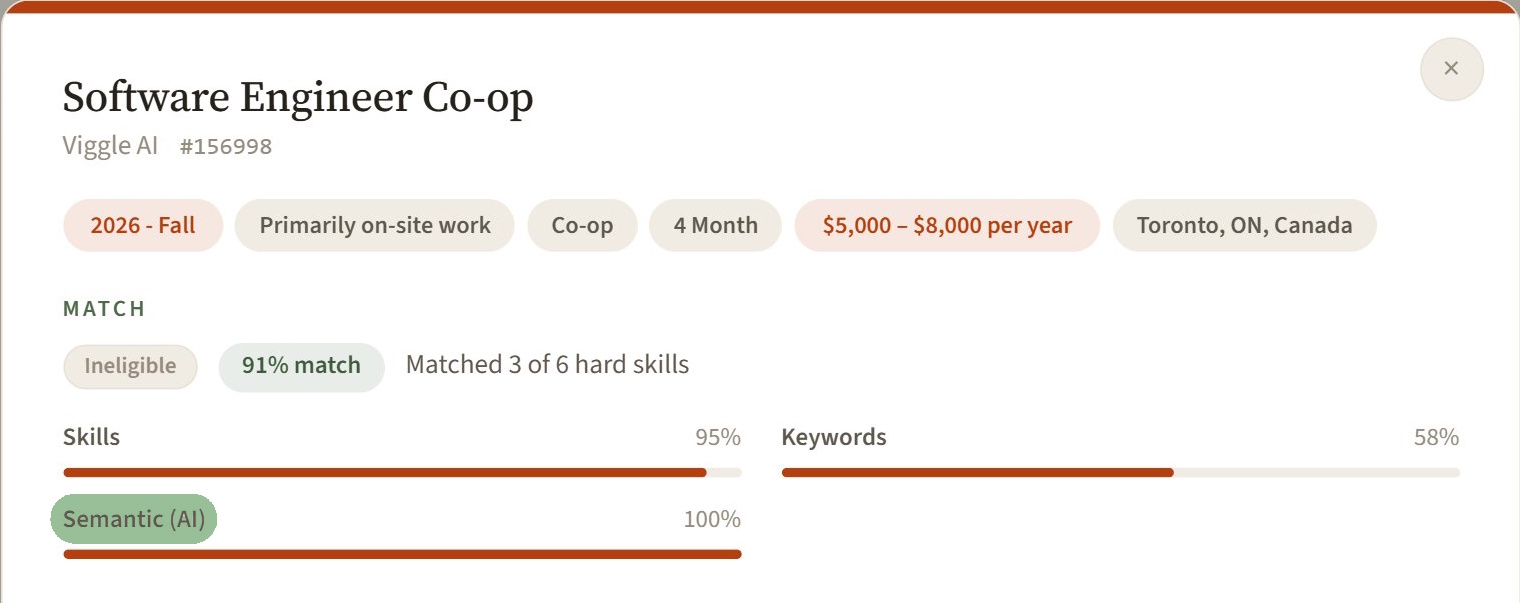
Your final match is 65% keyword + 35% semantic. Every card shows the split (Keyword 96 · AI 79) and the details view adds a dedicated Semantic (AI) bar so you can see exactly what moved the number.
Explainable, down to the bar
Open any posting and the match breakdown shows Skills, Keywords, and Semantic (AI) side by side. Hover a card's split to see the raw cosine similarity behind the AI number.
- Private by design. Your resume and every job description are embedded in a Web Worker in your browser. Nothing is uploaded.
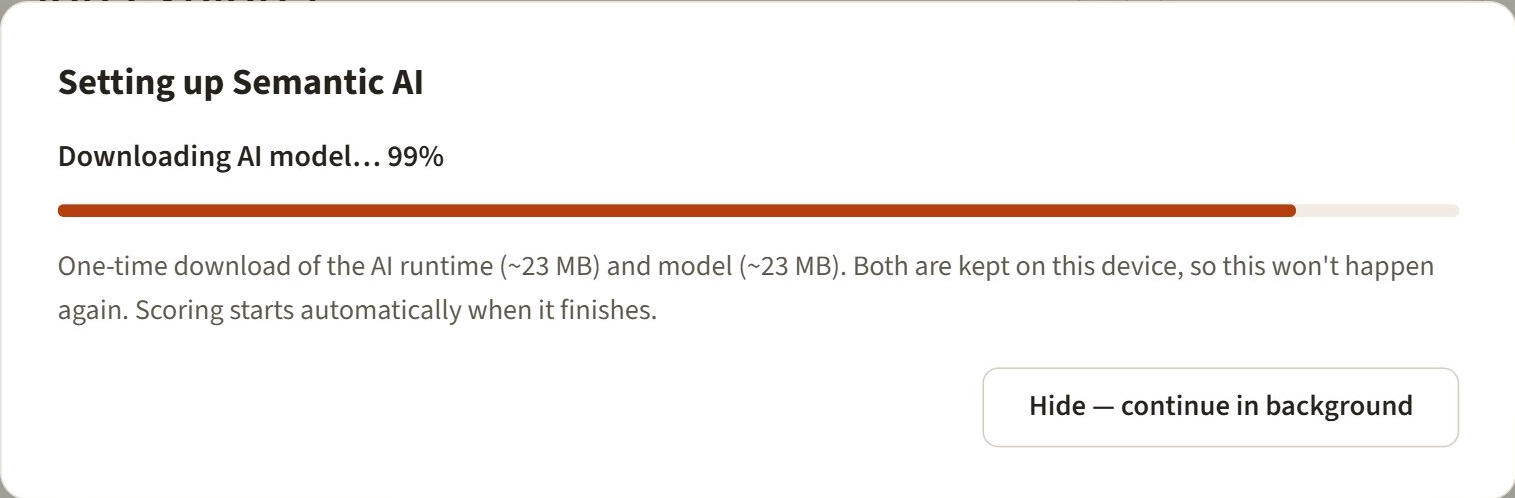
- Lightweight until you opt in. The extension ships without the model. Ticking “Semantic AI” downloads the runtime and model once (~57 MB) and keeps them cached.
- Scores never wait on it. Keyword scores appear instantly; the AI refinement streams in behind a “Refining scores” chip and never blocks the page.
- Honest about hardware. Before enabling, you're told it's compute-intensive on MacBook Airs, Chromebooks and older laptops. Thread count auto-scales to your CPU.
Know why you weren't selected
Quickly identify if a job application is inactive or if you were not selected.
A better way to browse NUWorks
Open an improved NUWorks with advanced filtering, match percentages, and all the original features.
Up and running in under a minute
No account. No configuration. Install, upload, analyze.
Install
Add the extension from the Chrome Web Store, or load it unpacked from GitHub.
Upload
Open the extension on NUWorks and upload your resume PDF, or paste the text.
Analyze
Hit "Analyze jobs" to see your match scores and filter the results instantly.
Spend your search on the right postings.
Built by a Northeastern student, for Northeastern students. Free, open source, and private.
Add to Chrome — it's free